

Getting Rid of Stretch Marks
January 5, 2026
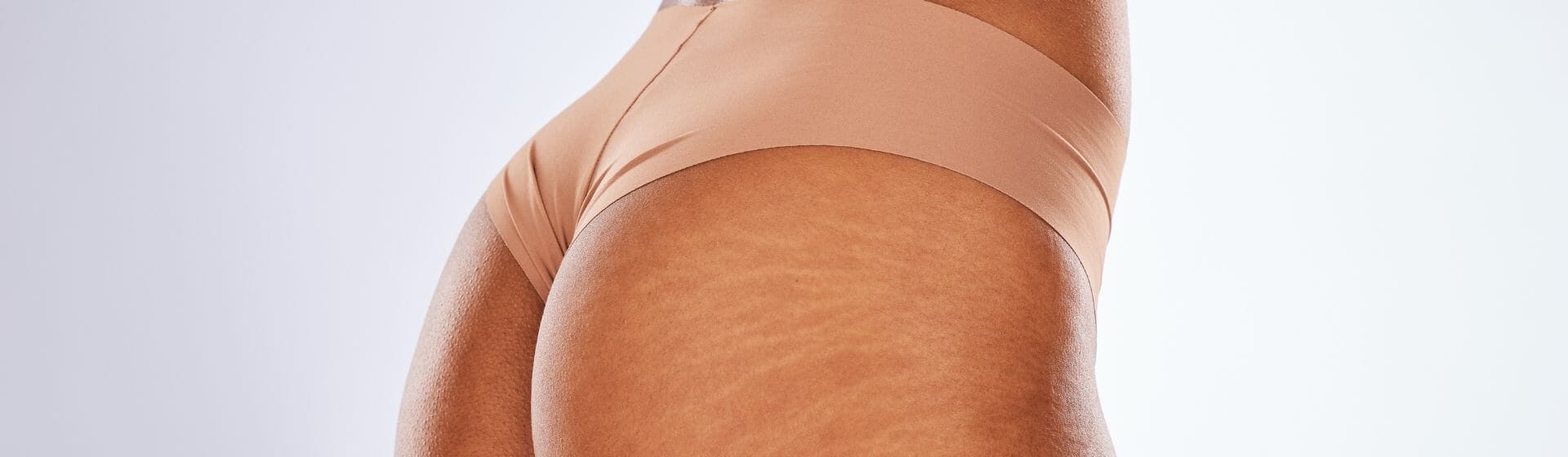
Stretch marks are a common skin concern that affect people of all ages and body types. While they are completely normal, many people look for ways to reduce their appearance and improve skin texture. Modern non-surgical treatments can help stimulate collagen and support skin remodelling, which may soften the look of stretch marks over time.
At uSkin Clinics, stretch mark concerns are commonly addressed using evidence-based options such as stretch mark removal treatments tailored to individual skin needs.
Key Takeaways
- Stretch marks are caused by rapid stretching of the skin and are very common.
- They can appear red, purple, pink, white or silvery depending on how new or old they are.
- Most stretch marks are permanent, but treatments may help reduce how noticeable they look.
- Treatments work by creating controlled stimulation in the tissue to support repair over time.
- Results vary based on skin type, stretch mark age, and how the body responds to treatment.
What Are Stretch Marks?
Stretch marks usually appear as indented streaks or lines on the skin. They can vary in colour and may look red, purple, pink, white, or silvery depending on their age and how the skin has responded to stretching.
They most commonly appear on areas such as:
- Abdomen
- Breasts
- Hips
- Buttocks
- Thighs
Stretch marks are especially common after pregnancy, but they can affect people of all ages and body types.
What Do Stretch Marks Look Like?
Stretch marks do not all look the same. Their appearance depends on:
- How long you have had them
- Where they are located on the body
- How quickly the skin stretched
Newer stretch marks often appear darker in colour, while older stretch marks tend to fade to lighter shades and may become white over time. Although some stretch marks can fade naturally, most are permanent. Treatments focus on improving their texture and visibility rather than eliminating them entirely.
How Do Stretch Marks Occur?
Stretch marks often develop during periods of rapid physical change, such as:
- Pregnancy
- Sudden weight gain or weight loss
- Puberty and growth spurts
- Bodybuilding or rapid muscle growth
Several factors influence whether someone develops stretch marks, including genetics and how quickly the skin stretches. Hormonal influences also play a role. Elevated levels of cortisol can reduce the skin’s elasticity, making it more prone to developing stretch marks. Corticosteroid creams, lotions, or medications may also increase this risk.
You may be more likely to develop stretch marks if you:
- Are female
- Have fair skin
- Have a family history of stretch marks
- Have experienced pregnancy or multiple births
- Have had significant changes in weight
- Use corticosteroid medications
How can we reduce them?
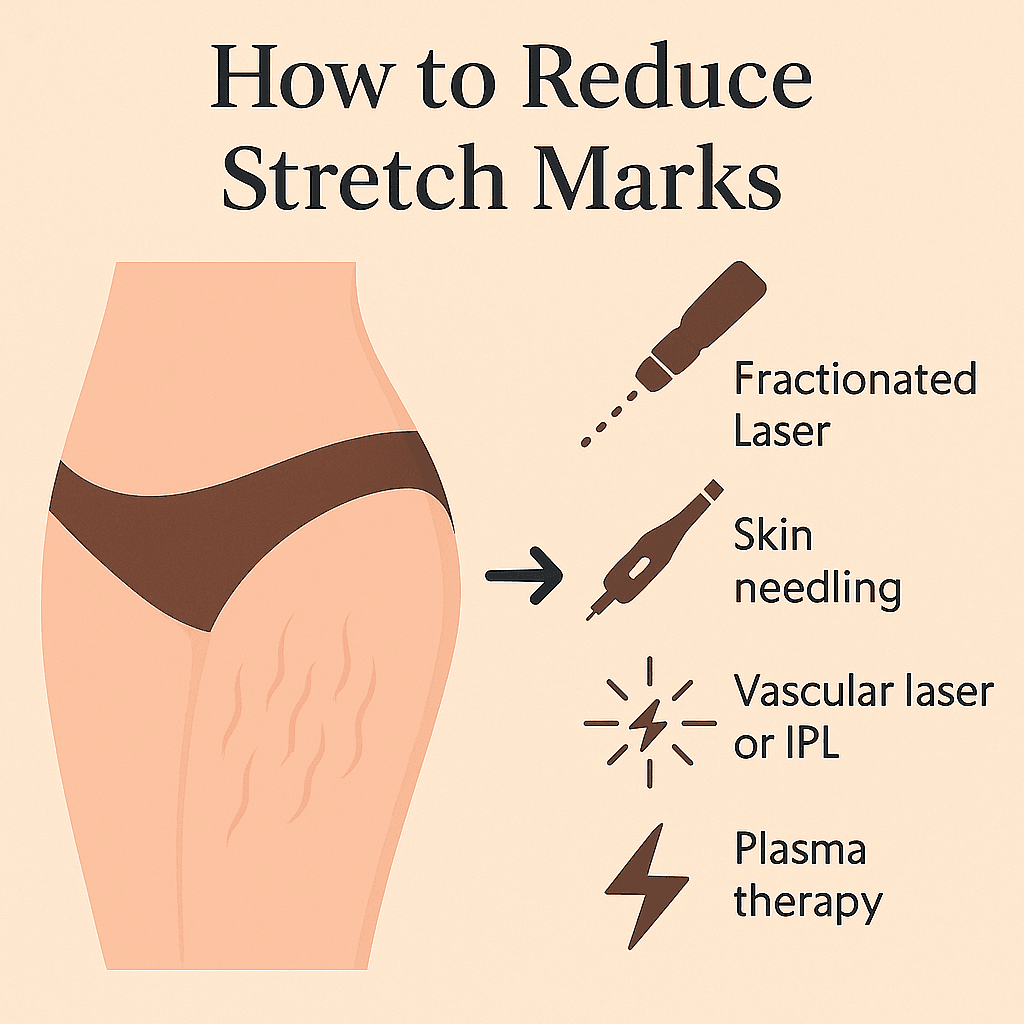
Reducing the appearance of stretch marks is a gradual process. At uSkin Clinics, treatments are designed to create controlled stimulation within the stretch mark tissue. This encourages the body to repair the area and replace damaged tissue with healthier tissue over time.
While stretch marks cannot be completely removed, these treatments may help soften their appearance and improve skin texture.
Stretch Mark Removal Treatments Available
Fractionated Laser Therapy
The 1540 fractionated laser used at uSkin Clinics was the first laser in the world to receive FDA approval for the treatment of stretch marks. Fractionated laser technology works by treating the skin in small, targeted dots rather than the entire surface.
This approach damages only a portion of the tissue at one time, allowing the body to heal gradually. By avoiding full-surface damage, the skin is encouraged to repair itself without excessive scar formation.
Learn more about this technology on our Fractionated Laser Therapy page.
Skin Needling
Skin needling works in a similar way by creating controlled micro-injuries in the skin using very fine needles. This process encourages the body’s natural healing response.
An advantage of skin needling is the ability to infuse specialised serums into the skin during treatment to support healing and recovery.
Vascular Laser or IPL
If stretch marks still contain redness, IPL or vascular laser treatments may be used to target this colour change. These treatments can assist in reducing redness and improving overall appearance.
Plasma Therapy
Plasma therapy uses a different form of energy and is deeper than other treatment options. This approach can be useful for more stubborn stretch marks that have not responded as well to other treatments.
Stretch Mark Removal Aftercare
After treatment, skincare may be recommended to support healing and improve overall results. Your clinician will provide personalised aftercare advice based on the treatment used and your skin’s response.
What Results Can You Expect?
Stretch marks are permanent, but treatment can help make them appear less noticeable. Results vary depending on the age of the stretch marks, skin type, location, and how the skin responds to treatment.
In cases where stretch marks have faded to white, cosmetic tattooing may sometimes assist in restoring colour closer to the surrounding skin tone.
Book a Consultation
If stretch marks are something you would like to address, a professional consultation can help determine the most appropriate treatment options for your skin.




Similar Posts
Which Treatments Can Improve Skin Texture Over Time?

Improving skin texture is often less about finding a single treatment and more about supporting…
What Causes Skin Texture to Change as You Get Older?

Skin texture changes naturally as we age due to a combination of collagen loss, slower…
Which Stubborn Fat Areas Respond Best to Fat Freezing?
Fat freezing is most commonly used for localised areas of stubborn fat that remain despite…

Which Treatments Can Improve Skin Texture Over Time?
Improving skin texture is often less about finding a single treatment…

What Causes Skin Texture to Change as You Get Older?
Skin texture changes naturally as we age due to a combination…
Which Stubborn Fat Areas Respond Best to Fat Freezing?
Fat freezing is most commonly used for localised areas of stubborn…
